
In partnership with

Join 250,000 Founders & CEO's Staying Ahead

Ever reach the end of your workday and wonder what happened in the business world while you were busy running yours? Max’s CEO Report catches you up on the biggest business, tech, and AI stories in just a few minutes.
Each edition gives you the news and context worth knowing, so you can stay informed, spot new opportunities, and sound suspiciously well-read in your next meeting.
California Attorney General Rob Bonta has emerged as one of the country’s most aggressive antitrust enforcers, helping lead the states’ case against Live Nation and Ticketmaster while scrutinizing powerful companies across the entertainment industry. But his office’s reported role in the death of California’s most closely watched ticket-resale bill has created an awkward question: Why would the state’s chief consumer-protection officer help stop legislation promoted as a victory for concert fans?
⬇️⬇️ CHECK OUT THE PODCAST HERE ⬇️⬇️
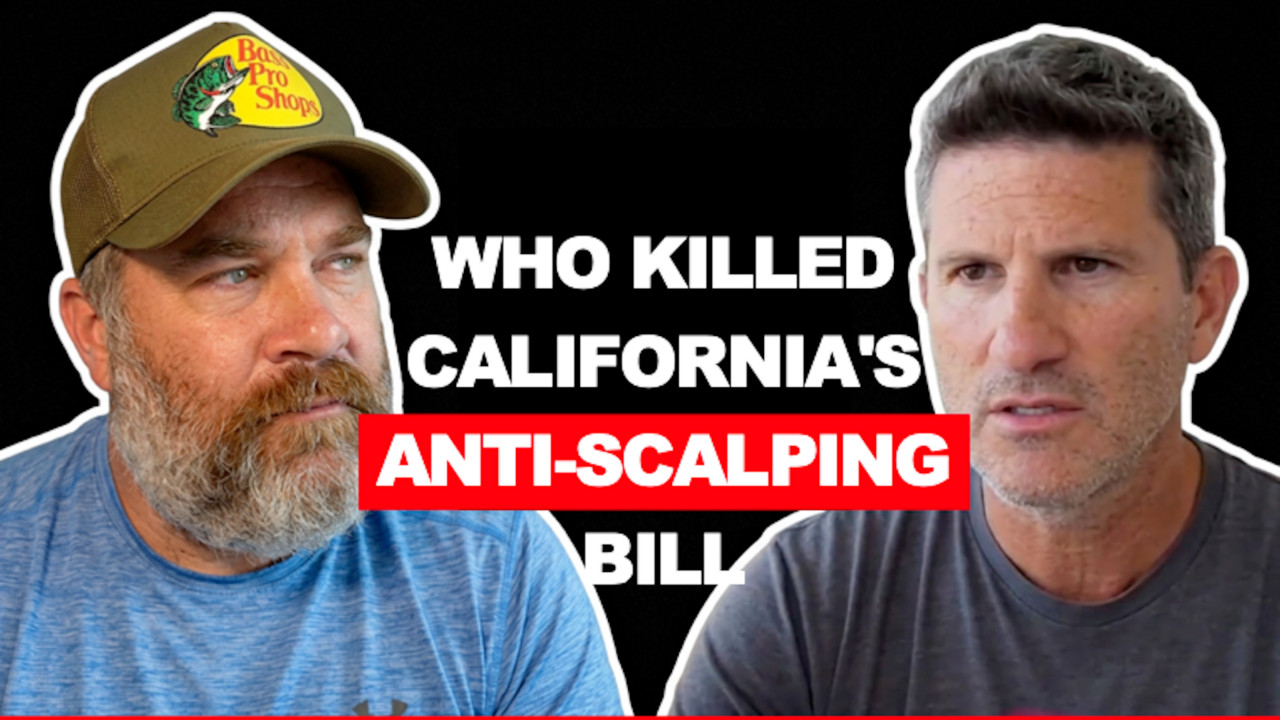
That question was at the center of the latest episode of Decibel & Docket.
AB 1720, the California Fans First Act, initially proposed a broad prohibition on reselling concert tickets above face value. After months of amendments, the bill was narrowed to venues with 3,000 seats or fewer and permitted resale prices up to 10 percent above face value.
Even that limited version drew extraordinary opposition from StubHub. The company spent approximately $3.4 million lobbying in California this year, including roughly $2.6 million during the most recent quarter.
The bill nevertheless survived multiple legislative committees before reaching the Senate Appropriations Committee’s suspense file, where proposals carrying significant costs can be quietly held without lawmakers casting a public vote against them.
Sources say Bonta’s office raised concerns that implementing and enforcing AB 1720 could cost approximately $1.4 million. That objection gave appropriations officials a fiscal basis for holding the legislation, effectively killing it for the session.
Artist manager Randy Nichols, who helped advocate for AB 1720, told Decibel & Docket that Bonta’s intervention followed a sustained lobbying campaign built around the argument that restricting StubHub would ultimately strengthen Ticketmaster.
StubHub’s position presented Bonta with a complicated political problem. He is helping seek structural remedies against Live Nation and Ticketmaster after a jury found the companies liable in the government’s antitrust case. If Ticketmaster is eventually forced to surrender venue contracts, technology or other assets, regulators will need viable competitors capable of entering the newly opened market.
But Nichols disputes the idea that StubHub is one of those competitors. Unlike AXS, SeatGeek and other primary ticketing providers, StubHub does not generally supply venues with box-office software, access-control technology or initial ticketing services. Its core business is secondary resale.
Bonta’s involvement does not necessarily prove that he set out to kill the bill. As attorney Michael Seville explained on the podcast, scrutinizing the cost and enforceability of proposed laws is part of the attorney general’s job. A government-imposed resale price cap also could have faced costly constitutional, interstate-commerce or federal-preemption challenges that Bonta’s office would have been required to defend.
California was also facing significant budget constraints, making even a relatively modest enforcement cost potentially consequential.
Still, the outcome is politically uncomfortable. Bonta helped derail a consumer-protection bill after a multimillion-dollar lobbying campaign by a ticket-resale company—while simultaneously pursuing a historic case against that company’s largest rival.
That does not make Bonta an ally of ticket scalpers. It does, however, illustrate the collision between two competing objectives: protecting fans from inflated resale prices and preserving competition in a ticketing market dominated by Ticketmaster.
Whether Bonta made a prudent enforcement decision or gave StubHub a convenient escape may depend on what happens next. AB 1720’s supporters say they intend to return, and the next version is likely to arrive with much greater scrutiny of the attorney general’s role.

Is Ellie Goulding Being Serious About Not Knowing About Her Manager’s Ties to Live Nation?
Ellie Goulding’s lawsuit against her former managers is ostensibly a dispute over undisclosed ownership and conflicting contractual obligations. But the case could also expose a largely unexamined part of Live Nation’s influence over the music business: its ownership of artist-management companies.
Goulding has filed suit in the United Kingdom against her former managers, Ben Mawson and Ed Millett, as well as HNOE Limited, the parent company of TAP Management. She alleges that she signed with TAP in 2018 without being told that Live Nation already controlled its parent company.
Live Nation reportedly acquired a 50.1 percent interest in HNOE in 2015 and purchased the remaining shares in 2019. Goulding stayed with TAP until 2025, paying the company a 20 percent management commission.
During that relationship, Goulding entered into agreements with Live Nation-affiliated companies involving touring, merchandise and a documentary. Those deals are now under scrutiny because of contractual provisions that allegedly restricted her managers from encouraging artists to stop doing business with Live Nation or doing anything that could diminish a client’s commercial relationship with the concert giant.
Those allegations go to the heart of what an artist manager is supposed to do.
Managers are expected to sit on the artist’s side of the negotiating table, compare competing offers and recommend the partner offering the best terms. If Goulding’s managers were contractually obligated to protect Live Nation’s interests, could they freely advise her to accept an offer from a competing promoter, merchandiser or business partner? Could they credibly threaten to walk away from Live Nation during a negotiation?
Attorney Michael Seville said on the latest episode of Decibel & Docket that the answers will depend heavily on the language of Goulding’s management agreement and what TAP disclosed to her.
Managers generally assume a fiduciary obligation to act in their client’s best interests. If TAP’s agreements with Live Nation interfered with that duty, Goulding could argue that her managers breached both their contract and their fiduciary responsibilities.
Proving financial damages may be more difficult.
Goulding continued working with Live Nation competitors during her TAP years, including appearances at AEG-affiliated Coachella. To recover substantial damages, she may need to identify specific offers, performances or commercial opportunities she lost because her managers favored Live Nation. Emails, competing bids and internal communications could become critical evidence.
She could also seek disgorgement, a remedy requiring her former managers to return commissions earned while allegedly operating under an undisclosed conflict.
Live Nation was not named as a defendant, but the company may have much at stake. Its corporate structure includes numerous subsidiaries and investments that are not always recognizable by their public-facing names. Goulding’s lawsuit could reveal more about the company’s management holdings and the restrictions placed on executives running those businesses.
That makes this more than a disagreement between an artist and her former managers. The case raises a broader antitrust question largely absent from the government’s case against Live Nation and Ticketmaster: How much influence does Live Nation exercise over artists through the management companies it owns?
The answer could reveal that the company’s reach extends deeper into artists’ careers than ticketing, promotion and venue ownership alone suggest.


